transactions
•fintech
•trends
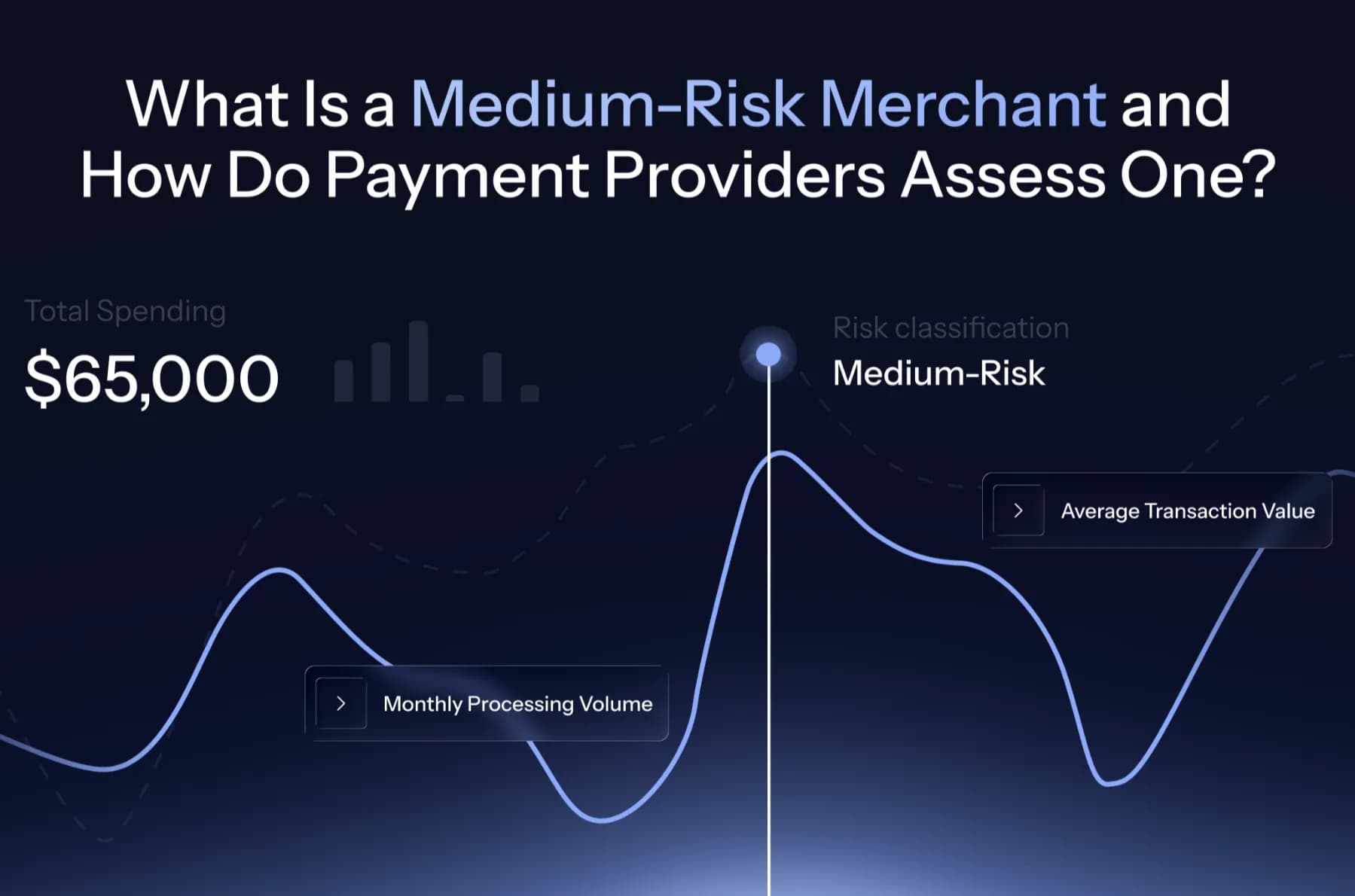
What Is a Medium-Risk Merchant and How Do Payment Providers Assess One?
A medium-risk merchant is a business that is neither low risk nor high risk, but has a medium risk profile.
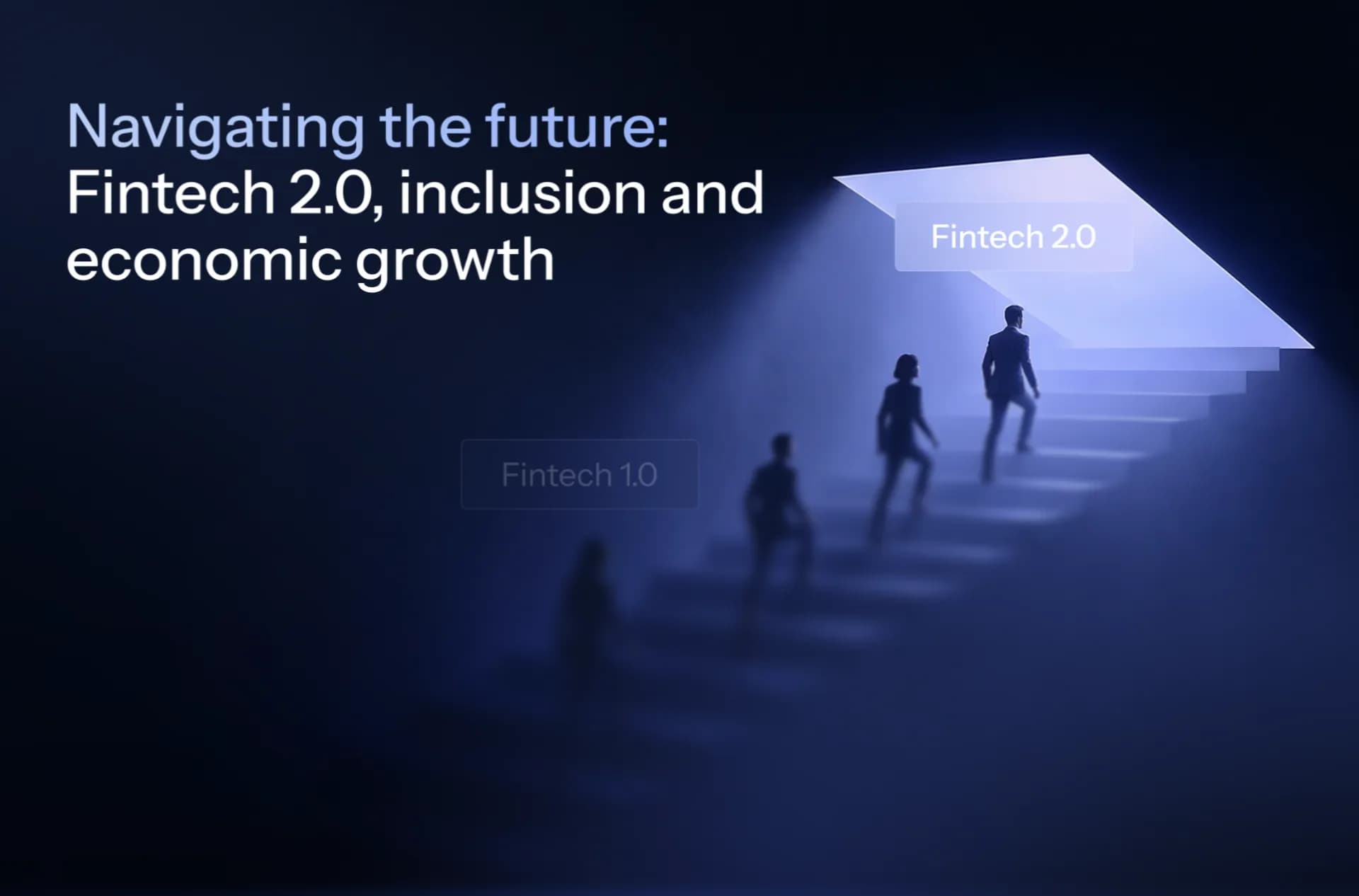
The future of fintech is here and the age of fintech 2.0 has already begun. The great news is this is an era that will engage new audiences and help drive more economic growth. Change has swept through, as new fintech industry trends reshape how new financial services solutions are designed and delivered for users. This means exciting and positive developments in terms of sustainable growth and financial inclusion, reflecting a complex stage in the evolution of fintech.
Fintech 1.0 was a period of rapid expansion and disruption. This was a time when fintech firms first began to appear out of nowhere to challenge the established financial service space, when they were nimble enough to use their advanced technology to outmanoeuvre stalwarts in the industry. Fintech 1.0 was categorised by aggressive attitudes towards growth, with scale being pursued at all costs over foundational architectural integrity. A lot of this relied on third-party fintech middleware and “pooling account” shortcuts to bypass the inherent complexities
But then the world changed and the fintech ecosystem development had to adapt. New fintech regulations were introduced and global markets matured as more people began to understand and engage with fintech. The concept of fintech unicorns also drove this, causing onlookers to sit up and take notice of how large some of these challengers to traditional financial service players could grow. Development of the fintech ecosystem led to a new approach and the space has since transitioned from aggressive disruption to profitability, discipline and deep integration.
This was also driven by a growing maturity in the sector. There was a distinct movement from ‘finance bro’ mentality and towards more responsible innovation and long-term thinking, with a greater recognition of sustainable economic growth and global financial inclusion. This meant moving beyond "middleware shortcuts" that created architectural ambiguity. Fintech 2.0 is now enabling new solutions to be designed that service those who typically struggle to access typical financial services – such as the unbanked and companies that are micro, small and medium sized (MSMEs).
To really understand how fintech 2.0 could lead to better financial inclusion, it’s important to realise the extent to which many people struggle to access existing products.
Traditional banks and financial services firms operate with static data. This means they use archaic and rigid data sets that often fail to fully represent the wider world. For example, people who are serial renters can often struggle to provide enough information about their property history when trying to satisfy demands for mortgage applications. Gig workers may juggle multiple jobs which on paper lead to less-than-perfect credit scores, unfairly impacting their ability to borrow money. And MSMEs may lack the data visibility of larger companies, simply due to resource constraints, meaning they often don’t get the same level of product access they need to hire and grow. And that’s before we get into the issues around financial services for disabled users.
This creates a persistent inclusion gap which unfortunately is continuing to widen as the world changes. A systemic failure occurs as, to really get to the root of this problem, the underlying infrastructure supporting these solutions needs to be reworked. Systems designed to cater for a wider range of customers lead to greater accessibility in fintech products. Inclusive design principles, which allow for greater flexibility in the data they require, mean the unbanked banking population have more ways to engage with banks and other providers of the services they need.
The financial inclusion benefits of fintech 2.0 have already been seen in markets such as Latin America and Africa. Here, innovative fintech 2.0 solutions are leapfrogging slower, more expensive legacy banking models and allowing for e-money and wallet-first architectures to thrive, meaning larger parts of the population can engage in these services. Inclusive payment solutions are able to thrive in these markets, giving proof of what can be achieved.
UK payments regulation are also driving this, and we only need to look at something like the National Payments Vision as being a sign of changing times. Initiatives like this are designed to encourage fintechs to scale responsibly and drive economic growth.
There are other examples, such as MiCA and the AI Act, which call for fintech 2.0 innovation to be done responsibly and with greater consideration for all stakeholders. This kind of approach is requiring compliance to be undertaken as a competitive advantage, with a more proactive than reactive engagement with the rules. AI, in particular, is a sensitive issue and requires human-in-the-loop structures which maintain an appropriate level of oversight. This ensures immutable auditability and prevents the systemic risks of LLM hallucinations in sensitive workflows.
Such awareness also helps efforts to be made towards digital financial inclusion that don’t compromise Sustainable Development Goals (SDGs). Digital payments can have significant emission impacts which justify a measured approach. Rigorous emission control models mean e-money is only minted against verified, safeguarded fiat deposits in the treasury. Conversely, a redemption model ensures that when a user withdraws funds, the e-money is ‘burned’, the issuer liability is extinguished, and the corresponding fiat is released from the safeguarding reserve. This ensures a constant 1:1 solvency that legacy pooling models cannot guarantee.
None of this is of course possible without the right technology to facilitate the fintech 2.0 shift.
Until now, ‘middleware’ has done a lot of the heavy lifting. This has allow fintech 1.0 solutions to rely on third-party processing software that was usually never designed for financial operations. Though this allowed fintech operations to scale quickly, and cost effectively, the limitations are clear and can mean challenges in regard to beneficial ownership, safeguarding segregation and multi-entity reconciliation. For an FCA-regulated EMI or a global processor, these shortcuts introduce weak financial domain modelling that makes a platform unsuitable for long-term institutional growth.
Fintech 2.0 instead adopts a ledger-first architecture approach. Greater sovereignty means fintech institutions now increasingly develop and own their architecture, meaning this is designed specifically for the financial services goals they are aiming to fulfil. This also allows for greater use of AI and agentic payments, something that is embodied at Cardaq in the Teido Financial Operating System (TFOS). This is a unified financial, operational and trust infrastructure which is designed to support a single source of financial truth. The financial inclusion benefits are clear, and this is helping us design our Pridepay offering – the first fintech solution specifically designed to champion LGBTQIA+ inclusion in fintech.
Ledger-First Design: Using an immutable, append-only ledger (PostgreSQL + Citus) to ensure every use of fiat or crypto is treated the same.
PrideID & Behavioural Identity: Building trust profiles for the unbanked based on device intelligence and interaction patterns rather than just legacy documentation, therefore supporting inclusive payment solutions and broadening the flexibility and reach of gender diversity in fintech.
Tokenisation-First Infrastructure: Reducing costs for MSMEs by abstracting payments into issuer and network tokens, thus lowering transaction friction and PCI scope.
Within this, a full suite of AI agents continually work with one another to handle high-volume intelligence tasks. These create efficiencies throughout the system which over time compound and multiply, with the agents repeatedly learning from the data and acting on. This ultimately can create real savings for end users. By reducing transaction costs and increasing the velocity of money, these technologies enable MSMEs to participate in global trade without the "gatekeeper" costs of legacy processors.
So where does this leave us?
The transition from Fintech 1.0 to Fintech 2.0 is marking the end of the era of "customising a processor." Gone are the days where fintech firms could get by on middleware, unintentionally repeating the mistakes of legacy infrastructure.
Instead, the future belongs to those who own and operate sovereign AI-native financial operating systems. This eliminates the "architectural ambiguity" imposed by legacy middleware and means adopting a ledger-first, event-driven core, we can finally address the structural failures that have historically limited financial inclusion. The fintech 2.0 firms that have realised this, and are creating infrastructure that is more open, flexible and accommodative, will be the ones that support stronger financial inclusion for all.
Cardaq is one of these leaders. Cardaq remains steadfast in its commitment to this sovereign future. Through the implementation of TFOS, we are building an inclusive digital financial ecosystem that prioritises real-time financial integrity, institutional discipline, and human-governed AI. Our objective is to provide the foundational infrastructure that levels the playing field and champions inclusion allowing MSMEs and global companies alike to operate with total infrastructure sovereignty and financial intelligence.
This is what the path to sustainable and inclusive growth looks like, through sovereign, intelligent infrastructure. We invite our partners to join us in implementing this new standard for the next generation of global finance. If you want to learn more about the fintech 2.0 solutions we are building, get in touch with the team today.
AUTHOR

Cardaq Team
28 August, 2026